They’re just numbers, but statistics can be scary. Consider this: Eighty-eight percent of children who drown are under the supervision of another person – usually a relative, according to a study by the nonprofit Safe Kids Worldwide.
Another stat: About 75% of drownings involving children under 15 are linked to a gap in adult supervision, according to the U.S. Consumer Product Safety Commission.
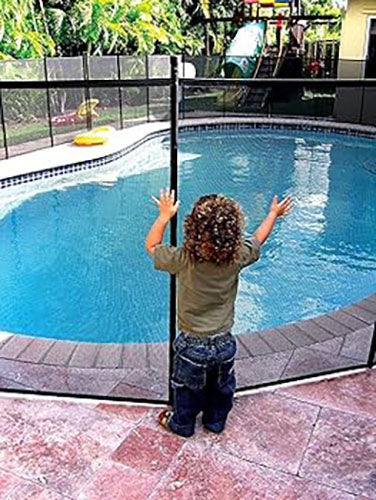
The good news: Protective barriers, lifesaving equipment, alarms, locks and a healthy dose of savvy about water safety greatly reduce accidents and drownings in the home pool.
In fact, proper installation and use of fencing could prevent 50 percent to 90 percent of residential pool drownings, Safe Kids reports.
Given the Triangle’s extremely hot weather, pools are common in our area. Here’s what you need to know to create a plan for swimming security.
 Supervision
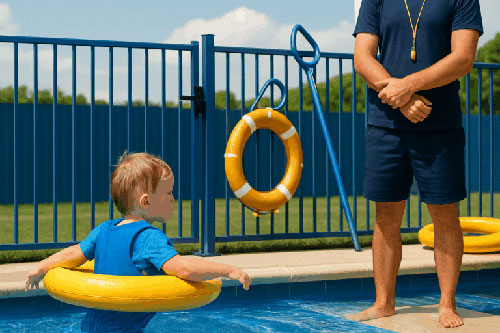
Safe Kids recommends that adults take turns serving as “water-watchers,” lifeguards who constantly observe children in or near the water. If the children are young and non-swimmers, an arm’s-length away is a safe distance.
If this sounds unrealistic, remind yourself that drowning is the second-leading cause of injury-related deaths among children ages 1 to 15 in the nation, according to the Centers for Disease Control and Prevention.
Environment
Ninety-eight percent of pool- or spa-owning parents report they have taken adequate steps to ensure children’s safety, but most of them have not taken all the necessary precautions, notes Safe Kids. Part of the reason is cost to the homeowner, but sometimes it’s forgetfulness or neglect.
Pool-safety standards are difficult to enforce because they change through the years. Most requirements include a pool barrier or an approved safety cover to enclose residential swimming pools and spas. And if any of the home’s barrier walls have openings, such as windows or doors, an alarm or a lock system should be in place.
To begin with, when a contract is signed for a swimming pool or spa, a contractor, home builder or developer should provide a copy of the law and drowning-prevention literature.
 Gear and Equipment
The American Red Cross recommends keeping basic lifesaving equipment poolside. The gear includes:
- Plastic ring buoys with a rope attached or a shepherd’s hook.
- First-aid kits that include sunscreen and a list of emergency-telephone numbers.
- A phone that can be used to call 911.
- Buoy line secured across the shallow end of the pool, at least 1 foot before the deep-end drop-off.
Education
Parents and children should learn about aquatic safety. Safe Kids recommends that youngsters be enrolled in swimming lessons with a certified instructor by age 8. Safe Start at the YMCA is a drowning-prevention program for those ages 1 through 4.
It may seem like a lot of work, but it’s certainly worth it. By taking all these precautions, you’ll be able to savor a worry-free summer by the pool.